This basic summary does justice to our historical look at how the SEALs evolved, from their beginnings as underwater demolition teams in World War II and the early years of the Cold War in the Pacific to their current status as a component of the US Special Operations Command, conducting a variety of tasks around the world in support of conventional operations. As is obvious from the summary, however, much more can be said about this topic. The following discussion therefore builds on the summary in several respects: history, training, safety, and the civilian perspective on special operations.
The original field note
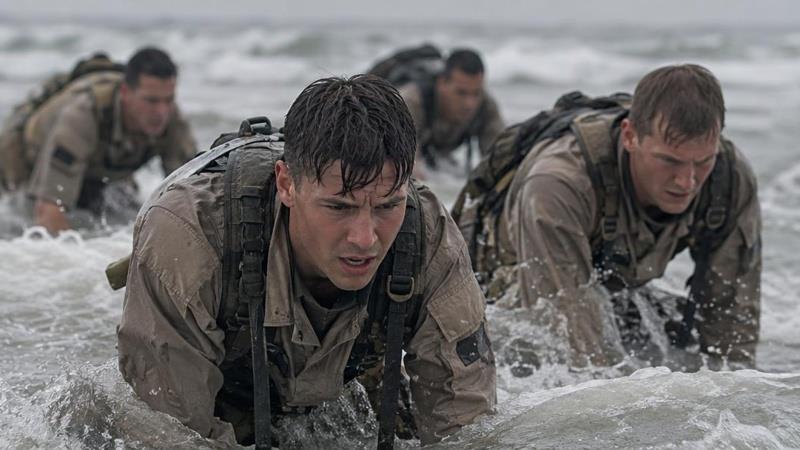
As described above, the units that eventually became the Navy’s SEALs were initially organized as underwater demolition units to clear landing beaches in the Pacific of mine and other obstacles. Thus their early mission and thus their training was designed to support the basic goal of such beach assaults: to clear an area of obstacles so that troops could come ashore in large numbers.
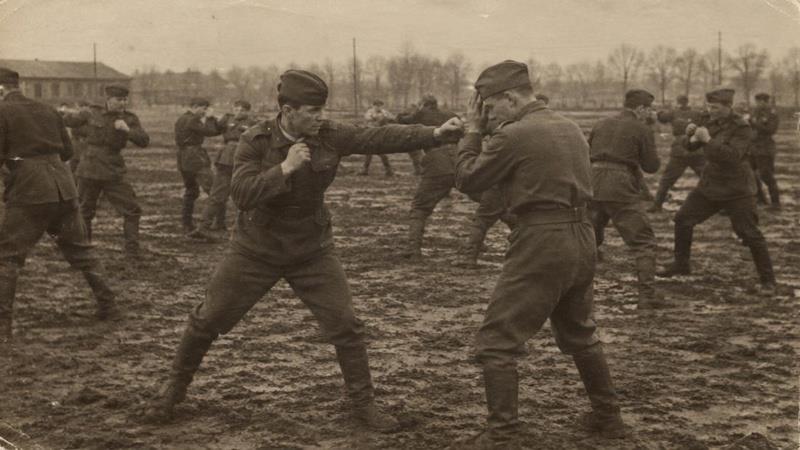
This history is critical to an understanding of the current hand-to-hand training of the special operator. Because of their origins as underwater demolition teams in the Pacific, it is clear that these operators have historically been required to function in a number of capacities. They are required to be good swimmers, to be able to read a map and to be able to function as effective fighters. Many of the operations that special operators engage in will require them to function in one or more of these capacities within a very short time frame.
Why the hand-to-hand curriculum shifted
During the Vietnam War SEALs were operating in flooded rice fields, tunnels and inside the village compounds of enemy-held areas. Because a rifle might be the wrong tool for these types of missions the SEALs began studying judo, boxing and a number of forms of knife fighting, including some Filipino variations.
All of the things we do in training are designed to solve a problem and then to exit the scene. Thus the position allows for access to something and then to move to something else.
Today SEALs engage in a variety of missions including unconventional warfare, counterterrorism,oupalsyug Special Reconsnaisance Missions (SRMs), and humanitarian aid, particularly in Fulfter Nis missionary. This means that they may be called upon to engage in combat in a variety of circumstances. The positions in the SEAL hand-to-hand combatives program are taught in the context of what you can use the position to reach for (a weapon, a radio, an exit, etc.). A great deal of time is spent on practicing how to escape from various positions as well as how to transition between techniques.
For civilians, it gives them a better idea of what to look for in a program that says they offer SEAL-style hand-to-hand fighting. The lessons of the historical styles that the SEALs practiced can be useful to a student of any age or skill level. More importantly, they have to know if the program is teaching the decision-making skills to use these techniques in a real-world situation or if they are just teaching a series of poses to emulate a fighting style.
Read the record before the legend
Now, most history about a military unit is presented through their ‘motto’ or ‘hero tales’. Reading the records of past military history allows one to develop a better sense of what actually went on in terms of date, mission, (what version of the) manual were they using, and what problems the members of that unit were trying to solve to overcome various obstacles to achieve their goals in a given environment (such as equipment, terrain and even chain of command).
Training changes when missions change
In Navy History Online’s book on hand-to-hand combative techniques, we examine what is left of each system after they have been tested in a real-world training environment. How did each technique and system work in practical application? Why did some systems last and others not? We look at all the Systems and answer these historical questions in practical terms for civilian application.
Use history without copying the battlefield
That’s not to say that the experiences of previous conflicts cannot provide much of interest to civilians but it would have to be assessed on a technique by technique basis and that technique practiced in a totally safe environment under the tuition of an experienced instructor. In any case there are far more interesting and relevant lessons for dealing in conflict from previous military engagements.
Start with context
The title of an article points to a larger subject than the article itself. History of military training for combat? Which aspects of military training can be helpful to learn for self-defense and for physical fitness? How are military programs organized? We can easily answer the last question: a unit has a mission, it has equipment, it has support and it has a chain of command. But that is not all there is to know about the history of military training.
What a responsible instructor looks for
Appreciate the qualified instructors. They outline the purpose of the drill, establish a boundary, observe the student under fatiguing conditions and correct for unsafe speed of technique. He or she can also set up new students with proper parameters and teach the student how the new skill fits into the overall training plan.
Keep the lesson practical
A better approach for a responsible civilian reader is to use this historical subject for a number of end points. For example, he could look for reputable self-defense programs to take; start to get in shape; search for relevant safety information about his region or town; ask instructors about live practice and how they control for the students; keep notes on what he learned.
Limits are part of the lesson
Finally, a few words of warning. First, no article can replace a qualified coach teaching a qualified student within the appropriate parameters of that student’s individual health and prior injuries. Second, all sports, including martial arts, have components that require specialized equipment and that can safely be practiced only within a controlled training area (such as a school gym) with a suitable partner and instructor. Third, all legal restrictions on how to practice a particular activity within your locale must be taken into account. Finally, training in martial arts has consequences, so be very conservative when translating historical information into practice.
A reader’s checklist
- Work out which part of the lesson is dependent on specific military hardware, other service members, and specific training facilities.
- Spread your weight evenly throughout your body by keeping your balance.
- Ask an instructor how he/she will control intensity of a session and how he/she will take care of a beginner.
- Stop training immediately when you are in pain, are confused or become fatigued while training.
- Verify what your local laws and training providers say regarding any training described in this article.
Closing perspective
“Navy SEALs: A Brief History” is most useful for civil paranoids when they read in a disciplined and inquisitive way. Repetition, review and clear standards are what improves the military programs, the physical and mental stress in all areas. To apply the best of that to one’s own physical skills, verify the sources, train in the right environments, keep your goals on a realistic level and measure your progress by the best test of all: will you make better, safer decisions?
Training note 1
You keep a training journal for your sessions. This will help you to track the aim of your session, what has changed in the run-up to it and what worked for you best. A good journal will enable you to better track your progress and have more relevant conversations with your instructors about points you are struggling with.
Training note 2
The same restraint needs to be applied to the equipment being used for practice. As with training, learning new techniques and improving does not need to mean expensive accessories. Comfortable, quality clothing, practice on safe surfaces, and sufficient protective gear are more important for practice than accessories.
Training note 3
Rarely are the sessions linear in terms of the skills you improve from one to the other – eg you can improve your timing on one day and have exposed a base weakness or decided too late on another day. But identifying these weaknesses within controlled practice allows for a focus on those particular skills the student needs to develop prior to increasing intensity.